Saved Before the Storm: A 2026 Primer on the Marine Corps Family Readiness Officer
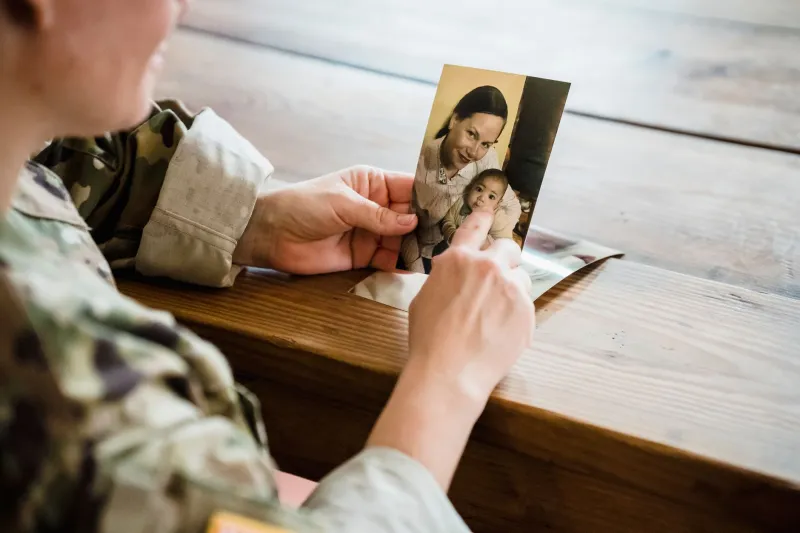
The first call many Marine families make to their unit's Family Readiness Officer comes at the worst possible time: a deployment has been extended with little notice, orders have arrived for a move in three weeks, or a relative back home is in the hospital and word has to reach a Marine who is not carrying a phone. The office is not hidden. It is simply easy to postpone, because most days it seems unnecessary and most weeks there is something more urgent to do.
That arithmetic changes quickly. Building a working relationship with the FRO in a quiet season is the difference between a family that knows exactly whom to call and a family that spends the first anxious hours of a crisis working the chain of command from memory.
What the Family Readiness Officer Actually Is
The FRO is the commanding officer's designated link between a unit and its families. The position sits inside the command's Unit, Personal and Family Readiness Program, and the person who fills it is appointed by the commanding officer. In practice that person may be a Marine on the unit staff, a spouse, or another volunteer, and many FROs carry the duty alongside a full-time job or a household of their own.
The role itself is defined by official communication. The FRO passes command-approved information to families, keeps the unit's family contact roster current, coordinates family readiness events and briefings, maintains the Family Readiness Command Team, and connects households to the programs built to help them. That referral list is longer than most families realize: Marine Corps Family Team Building, Marine and Family Programs, the Exceptional Family Member Program, the School Liaison Program, Navy-Marine Corps Relief Society, the unit chaplain, and Military OneSource, among others.
What the FRO offers is not opinion or rumor control in the informal sense. It is a structured channel, and the structure is the point. When information is moving quickly, a family that already knows where official word will appear is far less likely to be misled by a group chat.
What the FRO Is Not
A clear understanding of the boundaries prevents frustration on both sides.
The FRO is not a counselor. When a family needs emotional or mental health support, the FRO's job is to point toward the chaplain, Military OneSource, Marine and Family Programs, or the appropriate medical resource, not to provide clinical care. The FRO is not a casualty assistance officer; casualty notification is a separate and carefully prescribed duty that does not belong to this office. The FRO does not issue or amend orders, does not adjudicate pay and entitlements, and does not have authority over a Marine's career. In those matters, the FRO routes the family to the appropriate office and, when needed, to the chain of command.
Nor is the FRO a guaranteed twenty-four-hour line. Coverage arrangements vary by unit and by command. Families should ask about after-hours contacts directly rather than assume them.
Treating the FRO as a coordinator and a conduit rather than an all-purpose authority is both accurate and considerate. The person in that seat is often fielding dozens of households at once.
Three Moments When the Number Matters
A rumor about an extension. Unofficial word travels fast in a deployment. Within hours of a rumor, a family with the FRO's contact information and an understanding of how the command releases official updates can check the source instead of the group chat. Even when the answer is that nothing has been announced, a verified "nothing has been announced" is worth a great deal.
A holiday-season move. Orders arriving in November or December compress an already complicated household into a few weeks. The FRO can connect a family to relocation briefings, school liaison support, and relief resources, and can flag which questions belong with the unit and which belong with the destination installation.
An emergency at home. When a Marine needs to be reached quickly for a genuine family emergency, the established path runs through the American Red Cross message system and the command, not through social media. A family that has already confirmed how that process works and what information it requires saves precious hours on a night it cannot spare.
Questions Worth Asking Early
- How does this command push official information to families, and where is it posted?
- Who is the point of contact when the FRO is unavailable?
- How should family contact information be updated, and how often is the roster verified?
- What events and briefings are scheduled over the next ninety days?
- Which questions should come to this office, and which belong with the chain of command or another agency?
- How does the Red Cross message process work for this unit, and what details does it require?
A Checklist for the 2026 Holiday Season and Beyond
- Confirm the FRO's name, phone number, and email, and store them in more than one place, including a paper copy.
- Verify that the unit roster holds current phone numbers, addresses, and emergency contacts for every adult in the household.
- Ask how the command handled holiday communication during the most recent deployment cycle and what will change in the coming one.
- Attend one family readiness event this season, even if the agenda looks routine. Familiarity built in calm months pays off later.
- Learn the names of the Family Readiness Command Team and the unit chaplain.
- Save the Military OneSource number and the nearest Navy-Marine Corps Relief Society office alongside the FRO's contact.
- Set a reminder to recheck all of it after the first of the year, when rosters turn over and new staff arrive.
The Habit Worth Building
Readiness is mostly unglamorous work done in advance by people who hope never to need it. A Marine family that knows its FRO by name, understands the boundaries of the role, and keeps current contact information on file is not being pessimistic. It is being squared away, in the way Marines have always meant the phrase.
The holidays are a natural moment to make the introduction. The number is easier to find today than it will be on the night it is needed.