Packing Home in 2026: A Marine Family’s Care-Package Guide That Clears the Mailroom
A care package can do two things at once: carry practical comfort to a Marine far from home and remind that Marine that the home front has not forgotten. But affection alone does not clear a military mailroom. In 2026, families sending to an APO, FPO, or DPO address need the same qualities that make a good field plan: accuracy, preparation, and attention to detail.
The goal is not to create a perfect box. It is to create a box that arrives intact, passes inspection without delay, and feels unmistakably personal when it is opened.
Start With the Address, Not the Contents
Military mail succeeds or fails at the label. Use the service member’s full name as it appears in official records, include rank when appropriate, and follow the exact unit and box information provided by the Marine or the unit’s family readiness channel. The APO, FPO, or DPO designation and the appropriate ZIP code are part of the address—not optional details.
Do not add a foreign country name to an APO or FPO address. Military postal authorities route the package through the proper system, and well-meaning additions can create confusion. Print the address clearly, include a return address, and place a copy of the address and a small inventory list inside the box. If the outer label is damaged, that interior information can help.
Before mailing, confirm the current address with the Marine or the unit. Deployment rotations, temporary assignments, and unit moves can change mail routing. A package sent to last month’s location may be delayed for weeks or returned.
Customs Forms and the Paper Trail
Most military mail still requires customs documentation when sending from the United States. Complete the required form accurately, describe contents in plain language, and state the value honestly. “Gifts” and “care package” are not sufficient content descriptions by themselves; list categories such as “snack foods,” “toiletries,” or “reading material.”
Keep the receipt and tracking information. Military mail is reliable, but it is not instantaneous. Tracking helps families answer questions without guessing, and it gives the Marine a rough idea of when to watch for the box.
If a package contains commercially packaged food, check the current rules before sealing the box. Regulations can change, and the U.S. Postal Service and military postal guidance remain the authoritative sources. When in doubt, choose shelf-stable, commercially sealed items and leave restricted goods at home.
What Belongs—and What Should Stay Behind
Care packages should be built for the journey. Heat, pressure, and handling can turn a kind gesture into a mess. Avoid chocolate and meltable candies in warm months unless they are packed with that risk in mind. Avoid glass containers, aerosols, flammable liquids, and anything that can leak or rupture. Powders should be double-bagged. Liquids should be sealed in separate plastic bags, even when the container is new.
Alcohol, tobacco, and certain restricted items are generally poor choices for military mail and may be prohibited depending on destination and command policy. Do not send political materials, pornography, or anything that could embarrass the recipient during inspection. If a family is unsure about a specific item, the safest course is to ask the unit’s postal or family readiness representative before mailing.
Practical items often matter most: unscented toiletries, foot powder, lip balm, sunscreen, socks, batteries in original packaging, and sealed snacks that survive heat. Add a few comforts chosen for the individual Marine—favorite coffee, a specific brand of crackers, a paperback, or a small hobby item.
Packing for Heat, Handling, and the Long Haul
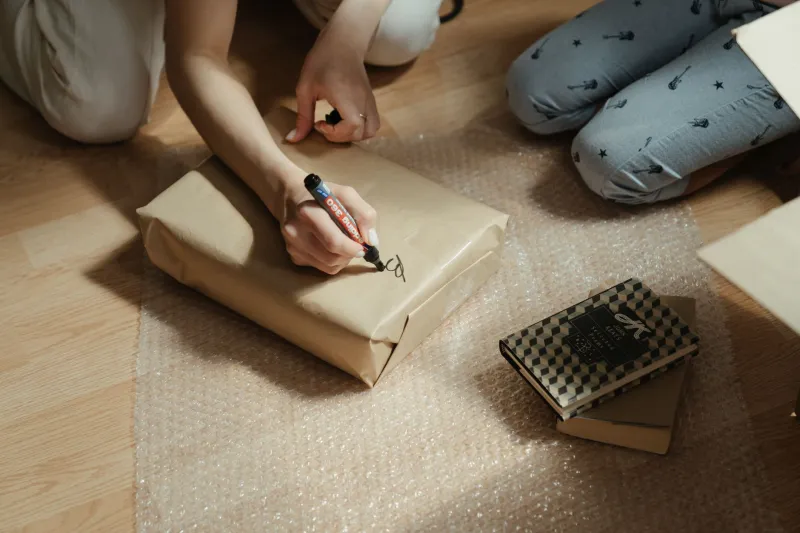
Use a sturdy box and reinforce the bottom with packing tape. Fill empty space so contents do not shift. Zip-top bags protect against dust and moisture and keep small items together. Put heavier items at the bottom and lighter items on top. Label the outside with the address only; do not write “chocolate,” “electronics,” or other contents on the exterior.
In warm climates, heat can affect medications, electronics, and food. Families should not send prescription medication unless the Marine has confirmed the unit’s policy and the shipment is properly documented. For ordinary comfort items, choose heat-tolerant foods and avoid anything that will soften, melt, or spoil.
A useful box is not necessarily a large one. Several smaller shipments spaced over time can be easier to store, easier to carry, and more encouraging than one enormous package that arrives all at once.
Timing Around Mail Cutoffs
Holiday mail cutoffs are real, and they vary by destination and mailing method. Families should check current military postal announcements well before major holidays and deployment milestones. The best practice is to mail early and to avoid assuming that a package sent in December will arrive by Christmas.
For birthdays, anniversaries, and homecoming dates, build in extra time. A box that arrives a week late is still a morale boost; a box that arrives after the Marine has left the location is a disappointment. When timing is tight, a card or letter sent separately can carry the message while the package follows.
The Details That Make It Feel Like Home
Morale lives in specifics. A printed photo of the family dog, a child’s drawing, a favorite local sports page, or a handwritten note about ordinary life at home can matter more than another pair of socks. Include a few familiar snacks that are hard to find overseas, but do not overlook the value of a simple letter.
Families can also coordinate. A rotating schedule among relatives can keep boxes arriving without overwhelming the Marine’s storage space. Church groups, neighbors, and unit family groups can divide categories so each box is useful rather than duplicative.
Finally, remember that the box is a form of communication. Write the Marine’s name on the inside of the lid. Add a short note that does not demand a reply. The point is not to create a logistics exercise, but to send a clear message: your family is steady, your community is grateful, and home is still here.