Honor With Hands and Ears: A Marine Family’s Year-Round Guide to Veterans Day

Photo by Photo by David Clode on Unsplash on Unsplash
On November 11, 2026, communities across the United States will pause to honor those who have worn the uniform. For Marine families, the date carries a particular weight: it is a moment to recognize service that has shaped households, careers, and communities long after the uniform was folded and stored. Yet the most meaningful recognition rarely begins or ends at the parade route.
The national observance has deep roots. The armistice that ended fighting in World War I took effect at the eleventh hour of the eleventh day of the eleventh month in 1918. In 1954, the holiday was renamed Veterans Day to honor all who have served. That history matters, but it is not a museum piece. It is an invitation to make the day useful—and to carry its spirit into the ordinary weeks that follow.
Listen First, and Do Not Ask for the Whole Story
Many veterans are willing to talk about their service. Others are not. A Marine family that wants to honor a veteran should begin with listening rather than questioning. The difference is subtle but important. Listening creates room for a person to share what they choose. Questioning, especially about combat or loss, can turn a ceremony into an interrogation.
Practical prompts work better than broad invitations. Ask whether the veteran would like company at a local observance. Offer a ride, a meal, or help with a yard task. If a story begins, receive it without pressing for details. Avoid opening with questions such as 'Did you see combat?' or 'What was the worst thing that happened?' Those questions may be asked in genuine curiosity, but they can also require a veteran to relive difficult material on a public holiday.
Silence is not rejection. A veteran who sits quietly through a ceremony, or who declines to attend one, may still be honoring service in a private way. Families can respect that choice while making clear that support remains available.
Map the Local Resources Before You Need Them
Honor is easier to sustain when it is connected to real infrastructure. Before November 11 arrives, Marine families can identify the local organizations that serve veterans throughout the year. Marine Corps League detachments are often close to home and can connect veterans with service officers, social events, and community projects. VA medical centers and Vet Centers provide health care, counseling, and readjustment services. State and county veterans affairs offices can help with benefits questions and local programs.
A small list kept in a kitchen drawer or phone can be more useful than a vague intention to help. Include the nearest VA facility, a Marine Corps League contact, and the Veterans Crisis Line, which can be reached by dialing 988 and pressing 1. Families do not need to become experts in every benefit. They need to know where to point a veteran who asks.
The same principle applies to younger Marines transitioning out of service. A 2026 observance can include a quiet check-in with a recently separated Marine who may be navigating VA paperwork, civilian employment, or a first holiday season without a unit. A single question—'Do you know who your county veterans service officer is?'—can be more valuable than a ceremonial thank-you.
Volunteer With Purpose, Not Just Presence
Veterans Day volunteering can be genuine or performative. The difference is usually whether the work was requested by veterans themselves. A community group that organizes a donation drive without asking what a local VA facility needs may create clutter. A group that calls first and asks for a list of requested items will create relief.
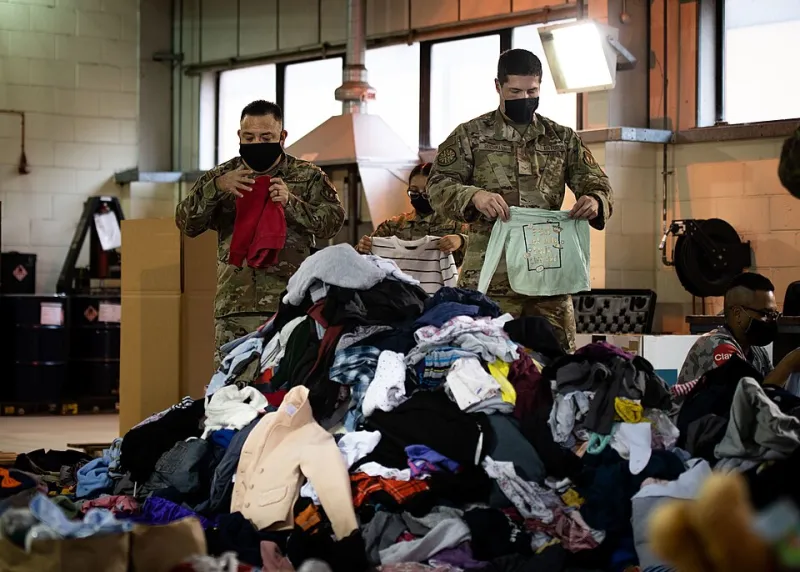
Marine families can look for concrete opportunities: driving veterans to medical appointments, assisting at a VA hospital, supporting a stand-down for homeless veterans, or helping a Marine Corps League detachment with a service project. The key is to follow the direction of the people being served. Presence in a photograph is not the same as presence in a need.
Volunteering can also be a family activity. Children who sort donated goods or help prepare a meal learn that honor has a practical shape. They see that gratitude is not only a feeling expressed on a stage; it is work done for a neighbor.
Teach Children the Difference Between Gratitude and Performance
Children learn by watching adults. If Veterans Day is only a performance—flags waved for a camera, a social media post, a quick thank-you before the next activity—children may absorb the idea that honor is a show. If it is specific and quiet, they may learn something more durable.
Parents can explain the holiday plainly. Veterans Day honors all who have served, not only those who died in service; Memorial Day carries a different purpose. The armistice of 1918 and the 1954 renaming are useful historical markers, but children often understand the present better through small actions: writing a card to a neighbor who served, attending a local ceremony with respect, or asking a grandparent what part of service they are comfortable discussing.
Gratitude does not require children to understand every detail of military life. It does require adults to model restraint. A child who sees a parent listen without interrupting, or volunteer without seeking credit, receives a clearer lesson than any classroom worksheet can provide.
Build a 364-Day Rhythm
A Veterans Day that lasts is not a single calendar block. It is a rhythm. In January, a family might check on an older veteran living alone. In spring, they might volunteer at a VA facility or support a Marine Corps League project. In summer, they might help a transitioning Marine review a benefits letter. In autumn, they might prepare for the November observance with a specific act of service already scheduled.
The point is not to turn every day into a ceremony. It is to make support ordinary enough that it does not require a holiday to justify itself. Marines and veterans are not seasonal figures. Their needs, their stories, and their contributions continue through the year.
The eleventh hour of the eleventh day remains a powerful symbol. But the best tribute a Marine family can offer is not only a moment of silence. It is a community that remains present after the flags are folded—listening, connecting, volunteering, and teaching the next generation that honor is a practice. At Marine Corps USA, that is the standard we strive to uphold: honoring service by supporting Marines and families in every season.