Ground We Still Stand On: Ten Battles That Forged the Marine Corps
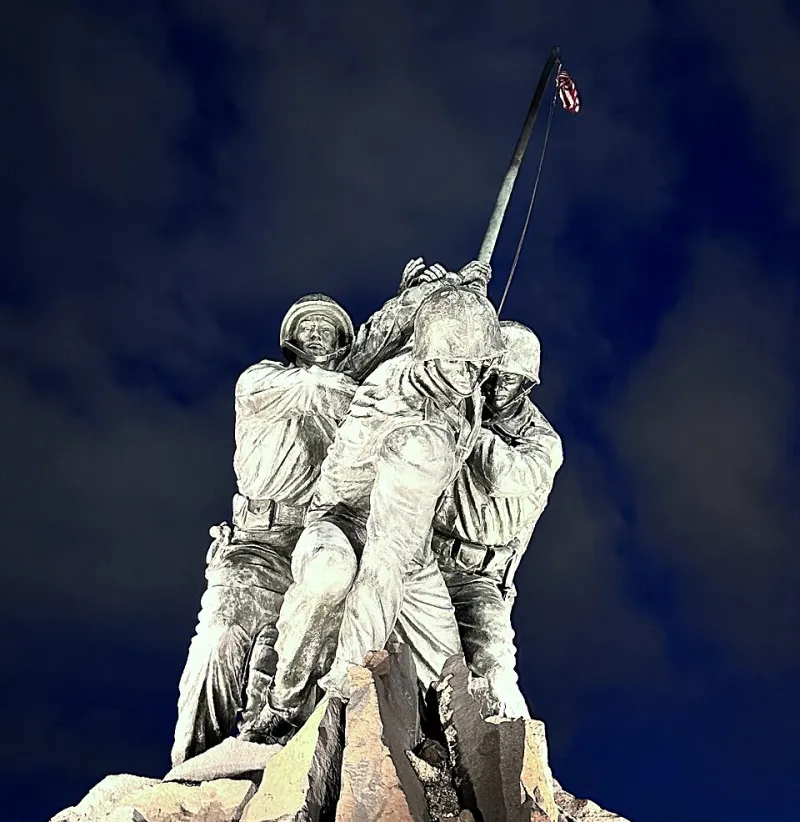
Photo: APK, CC BY 4.0, via Wikimedia Commons
Every Marine earns the Eagle, Globe, and Anchor the same way — through the crucible, on the same hallowed ground at Parris Island or San Diego. But the Corps itself was earned differently: battle by battle, across two and a half centuries. These ten engagements are not merely entries in a chronology. They are the inheritance of every Marine, and understanding them means understanding the institution you or your loved one chose to serve.
Belleau Wood, 1918
In June 1918, with Allied lines buckling near the Marne, an untested American brigade was thrown into the fight. German intelligence reportedly referred to the defenders as "dogs" — and the Marines adopted the nickname with pride. After three weeks of brutal, close-quarters fighting through wheat fields and dense woods, the line held. The lesson: when the situation is desperate, discipline and marksmanship matter more than experience. Marines today still draw on that standard of individual excellence under pressure.
Guadalcanal, 1942
The first American ground offensive of the Pacific War was launched with what the 1st Marine Division had on hand — little logistics, little air cover, and no certainty of relief. For six months, Marines endured hunger, malaria, and nightly naval bombardments before securing the island. Guadalcanal taught the Corps to improvise, to endure, and to fight on when resupply is a promise rather than a certainty.
Tarawa, 1943
In seventy-six hours, the 2nd Marine Division took an atoll the size of Central Park and paid dearly for it. Tarawa exposed the brutal arithmetic of amphibious warfare and forced the Corps to revolutionize its doctrine, equipment, and medical evacuation practices. The lesson endures: honest assessment of failure is not weakness. It is how Marines protect the next generation of warfighters.
Iwo Jima, 1945
Five weeks of combat against dug-in defenders produced the most iconic photograph in American history and more than 6,800 American dead. Admiral Nimitz's famous observation — that on Iwo Jima, "uncommon valor was a common virtue" — remains the standard by which Marines measure themselves. For families, Iwo Jima is a reminder that the cost of service is real, and that honoring it is a duty that outlives the war.
Chosin Reservoir, 1950
Surrounded and outnumbered in the frozen mountains of North Korea, Marines of the 1st Marine Division did not retreat. They attacked in a different direction, fighting their way seventy-eight miles to the sea while bringing out their wounded and their equipment. "Retreat, hell" is not bravado. It is a commitment to your people — no one gets left behind, in Korea or in life.
Khe Sanh, 1968
For seventy-seven days, Marines at the Khe Sanh Combat Base withstood a siege while the nation's attention fractured at home. The defense demonstrated the value of air resupply, patience, and morale when the politics of a war grow complicated. Marines learn here that loyalty is owed to each other first.
Hue City, 1968
The Tet Offensive turned a Vietnamese city into the war's fiercest urban battlefield. Marines fought house by house, block by block, in the first sustained city combat of the Vietnam War. Hue rewrote the manual on urban operations — and showed that adaptability under fire is a Marine hallmark, not a modern invention.
Kuwait and the Ground War of 1991
The sweep through the desert in Operation Desert Storm proved that a Corps built for attrition warfare could master maneuver warfare at speed. Marines covering the western flank drove north so fast the fight was over in one hundred hours. The lesson: tradition and innovation are not rivals. The Corps has always been both.
Fallujah, 2004
Twice in 2004, Marines fought for the city that became the epicenter of the Iraq insurgency. The Second Battle of Fallujah was the largest urban combat for Marines since Hue — house-to-house fighting that demanded courage, restraint, and trust between riflemen, engineers, and corpsmen. For today's veterans, Fallujah is not history. It is memory, and it deserves to be treated with care.
Marjah and the Helmand Campaign, 2010
In southern Afghanistan, Marines conducted counterinsurgency operations that blended combat with governance, agriculture, and community trust. The campaign demonstrated that modern Marines must be as comfortable winning cooperation as winning firefights — and it defined a generation of leaders now serving in communities across America.
Why This History Belongs to Families, Too
The Marine Corps does not ask families to fight, but it asks them to carry a great deal: the separations, the worry, and sometimes the grief. Learning these battles is not about glorifying war. It is about understanding what the person at your dinner table is part of — and why the values drilled into them at Parris Island were paid for at places like Belleau Wood and Chosin.
At Marine Corps USA, we believe heritage is a living thing. Visit a battlefield on your next road trip. Ask a veteran to tell the story in their own words. Teach the next generation that the words "Semper Fidelis" were earned long before they were printed on a recruiting poster — and that keeping faith with them is work we all share.